
CWS Window Installation in Coral Gables: A Homeowner’s Guide
CWS window installation in Coral Gables typically runs $850 to $1,400 per opening for mid-range impact-rated units, with full-home projects of ten or more windows landing between $12,000 and $22,000. The window itself is only half the cost. The other half is whether the installer follows the Miami-Dade NOA-approved anchoring method exactly, because a deviation of even four inches on anchor spacing can void the manufacturer’s warranty and fail your city inspection. If you’d rather not wade through product approval sheets yourself, call (954) 507-3613 and we’ll walk you through it.
We’ve been installing windows in Coral Gables since 2008, and we’ve pulled enough failed installs out of CBS walls to tell you this plainly: the approval number on the box means nothing if the crew doesn’t honor it on the wall. This guide covers what the NOA actually protects, what a proper rough opening looks like in this city’s housing stock, and what to verify before the truck leaves your driveway.
Key Takeaways
- A Miami-Dade NOA number certifies the window assembly and the approved installation method together. Change the anchors, and the approval no longer applies to your job.
- Coral Gables’s older CBS construction produces out-of-square rough openings. CWS frames tolerate about 1/4 inch per side; beyond that, shimming becomes a structural question, not a cosmetic one.
- The City of Coral Gables requires specific inspection points. If your installer sends you a text photo instead of being present for the pressure seal check, that’s a red flag.
- Two warranty layers exist on every CWS job: the manufacturer’s product warranty and the installer’s workmanship warranty. Both should be on paper, with dates, before anyone leaves.
What a Miami-Dade NOA Number Actually Covers (And What It Doesn’t)
A Miami-Dade Notice of Acceptance, or NOA, is not a sticker that makes any window legal to install anywhere. It certifies a specific window model in a specific frame configuration installed using a specific anchoring pattern, with specific fastener types, at specific spacing. The engineering evaluation behind that NOA number tested the window and its anchors as one system. CWS publishes product approval drawings that show exactly where each anchor goes relative to the frame corners, and those drawings carry the same weight as the window itself.
Here’s what homeowners in Coral Gables often miss. If a crew uses fewer anchors than the drawing specifies, or substitutes a shorter fastener because they hit rebar, the installation no longer matches the approved system. That means your product approval effectively expires on paper at your address. If a storm event damages the window, the manufacturer can point to the installation deviation and close the claim. We’ve seen this exact conversation play out with homeowners who bought excellent CWS product and trusted the wrong hands to set it.
What the NOA does not cover: your installer’s workmanship, the condition of your rough opening, the quality of the sealant bead, or whether the flashing detail sheds water correctly. Those items fall under the installer’s obligation, which is why the workmanship warranty matters as much as the product approval. If the pane is not true, the job is not done, approval number or not.
Reading a CWS Product Approval Sheet Before the Crew Starts
Every CWS window leaves the factory with a product approval document, and you have a right to see it before the first screw goes into your Coral Gables wall. The sheet is not insider technical jargon. It is the single most useful piece of paper on the job, and reading it takes about ten minutes.
Three things to check. First, confirm the model number on the sheet matches the model number on the window sticker. Second, look at the anchor schedule, which lists fastener type, length, and spacing from each corner. Third, note the approved substrate, because some CWS assemblies are approved for wood-frame openings while others are approved for concrete block. A Coral Gables home built in the 1960s almost certainly has concrete block at the perimeter, but additions and second-floor build-outs sometimes introduce wood buck framing.
In our experience, a homeowner who asks to see this sheet and checks it against the crew’s work sends a signal the whole industry understands. The crew knows they’re being watched by someone who reads. That alone prevents most shortcuts. If your installer brushes off the request or says the sheet is not your concern, call someone else. At TruePane’s Window Installation in Coral Gables, we hand you the approval sheet with the quote, and we annotate the anchor pattern on your copy before we drill.
Rough Opening Reality in Coral Gables’s Older CBS Stock
Coral Gables has some of the finest mid-century concrete block construction in South Florida, and some of the most stubborn rough openings. Block settles, mortar beds shift, and after sixty years of groundwater movement and humidity cycling, an opening that started dead square is often out by 3/8 inch diagonally. That is not a defect in your house. It is how CBS behaves over time. But it changes how the window must be set.
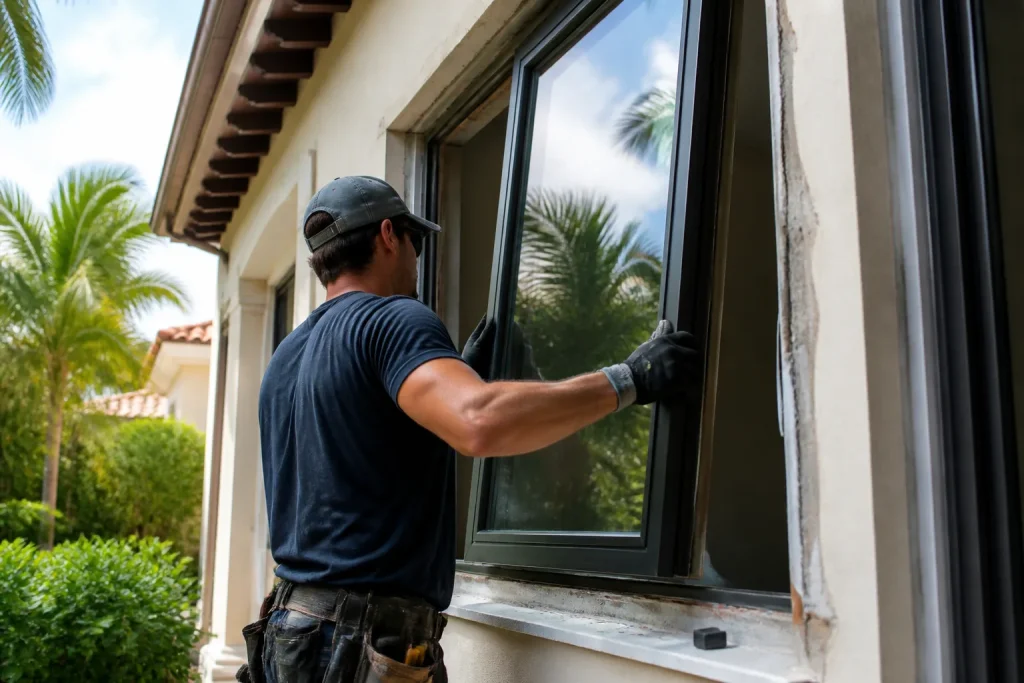
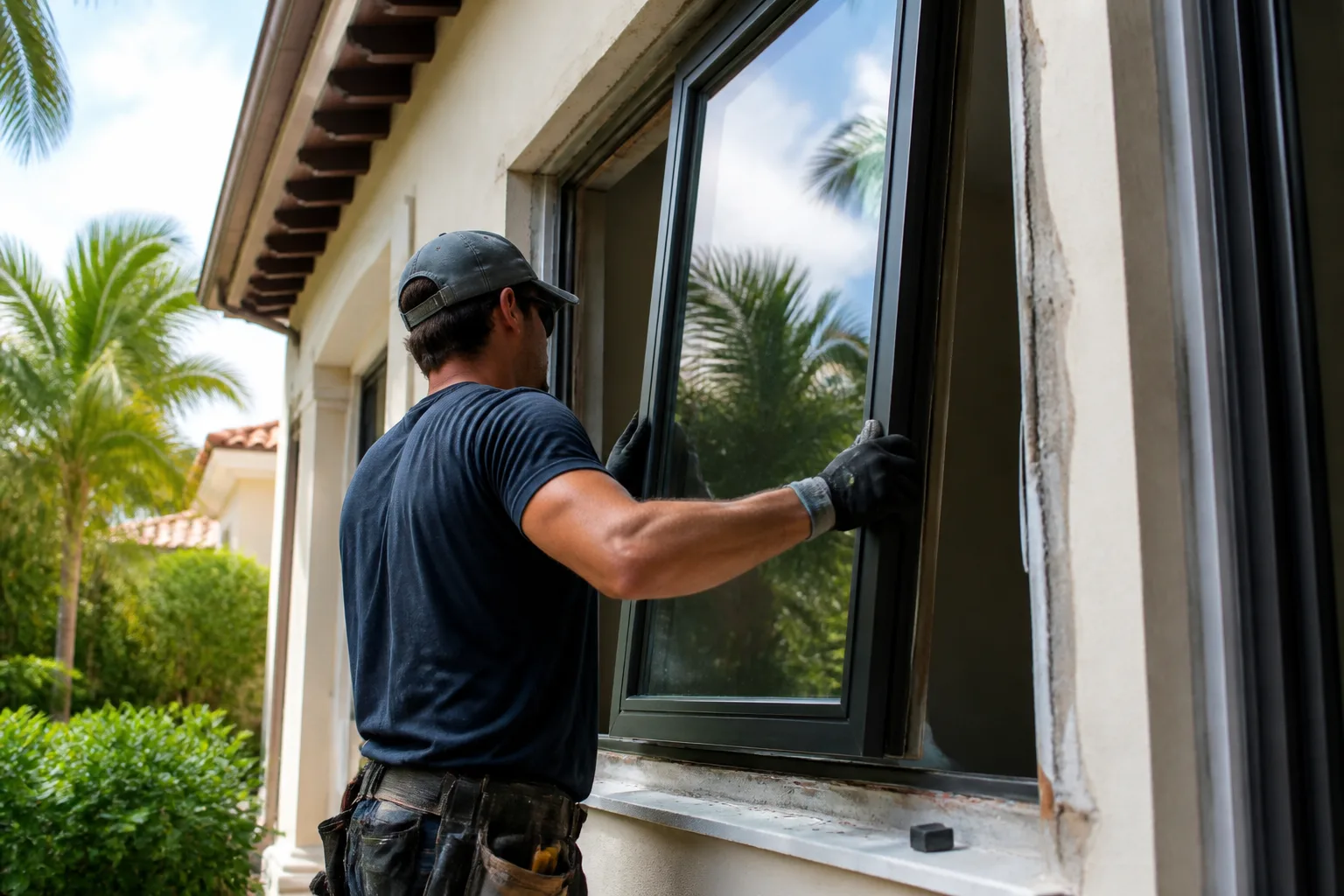
CWS frames are engineered to tight tolerances, and the approved installation methods assume a rough opening within 1/4 inch per side of nominal. When the opening is out beyond that, the installer has two choices: shim the frame back to square, or force the frame into the opening and let the jamb bow. The second choice is faster, and it’s the one that produces windows that bind in summer and seals that fog in eighteen months.
We pull windows from homes north of Miracle Mile and over in Cocoplum regularly where the old frame was screwed hard into a racked opening. The glass was fine. The installation was wrong. A proper set on an out-of-square Coral Gables opening means shimming to true, then anchoring per the NOA schedule without pulling the frame back out of square. It takes longer. The crew that does it without being asked is the crew you keep.
Related services in Coral Gables: if your project includes doors as well, our Door Installation in Coral Gables page covers the same NOA and anchoring standards for hinged, sliding, and impact-rated entry systems.
The Inspection Sequence Coral Gables Expects
The City of Coral Gables building department runs a specific inspection sequence for window and door replacements, and the installer’s presence matters at two points. Skipping either one will catch up with you at final, or worse, after a storm.
Here’s the order we work through on every CWS install in the city:
- Permit pulled before demo. No legitimate CWS installation in Coral Gables starts without a building permit. If the installer suggests you skip it to save time or money, end the conversation.
- Rough opening inspection after demo. The inspector checks the opening for structural condition and confirms the anchoring substrate matches the NOA. The installer should be on site to answer questions about the anchor schedule.
- Frame set and anchored per approved drawings. This is the step where anchor spacing and fastener type are physically visible. Photos get taken. Measurements get written down.
- Final inspection. The inspector verifies the installation matches the approved product and method, checks the sealant and flashing, and closes the permit.
We’ve had inspectors in Coral Gables know the CWS anchor schedule better than some installers. When a crew is present and can point to the drawing and show the exact fasteners they used, the inspection goes smoothly. When a crew leaves and someone else stands in, the inspector usually finds a reason to come back. We’ll be there when we say, for every inspection point, because that’s how this should work.
Two Warranty Layers: How to Confirm Both Are Actually Filed
Every CWS window carries a manufacturer’s product warranty covering frame, glass, and seals for a stated number of years. But that warranty is conditional. It applies only when the window is installed according to the approved method by an authorized installer. If the installation deviates, the manufacturer can and does decline coverage. Your second layer, the installer’s workmanship warranty, covers the labor and the watertight integrity of the set. The two layers do different jobs, and you want both in writing.
Here’s what a real warranty registration looks like on a CWS job. The manufacturer’s warranty card gets filled out with your model numbers, your installation date, and your installer’s company information, then registered online or mailed before the crew leaves your driveway. You receive a confirmation with the warranty duration in print. The installer’s workmanship warranty is a separate document stating the coverage period, what it includes, and how to make a claim. Ours is the 90-Day Done Right Promise: if it is not done right, we make it right, no paperwork, no arguing, no fine print that covers neither.
We register both manufacturer warranty layers in writing before the truck leaves, a practice we call The Keystone Standard. Ask any installer bidding your Coral Gables job whether they do the same. The silence that follows a direct question is information too.
If you’re also replacing aging windows rather than installing in new openings, our Window Replacement in Coral Gables page covers what changes when existing frames come out and NOA anchoring starts fresh.
When to Call a Pro
If you’re reading a CWS product approval sheet and the anchor schedule does not make sense to you, that’s normal, not a shortcoming. These drawings are written for engineers and inspectors. But the person you hire should be able to explain every line of them in plain language and show you where each anchor lands on your wall. If they can’t or won’t, you’re gambling with the largest weather barrier your home has.
Call us at (954) 507-3613. A live person answers, day or night. We’ll come out, measure your openings, quote your CWS options side by side on paper, and register both warranty layers before the truck leaves. That’s the standard we’ve kept in Coral Gables since 2008, and it’s the standard we intend to keep for the next thirty years. We hire local, train apprentices into journeymen, and show up uniformed, background-checked, and ready to work the way we’d work in our own mother’s house.
The Bottom Line
CWS makes a solid impact-rated window, and the product approval system in Miami-Dade is the strongest in the country. But the window only performs as approved when the installer follows the NOA drawings to the letter, shims out-of-square Coral Gables openings properly, and stands present for every inspection. The two warranty layers, manufacturer and workmanship, both need to be on paper with dates before the job is done. If you’re in Coral Gables and need help with CWS window installation, TruePane Windows & Doors home is where you’ll find a square deal and a straight answer. Free estimates, written line-item quotes, and no surprises on the bill. Call (954) 507-3613 to schedule yours.
Frequently Asked Questions
Mid-range impact-rated CWS units run $850 to $1,400 per opening installed, with whole-home jobs of ten or more windows ranging from $12,000 to $22,000 depending on size, glass package, and opening condition. Out-of-square openings in older Coral Gables CBS homes can add shimming labor. Call (954) 507-3613 for an exact quote, estimates are free and line-itemed.
If the installation deviates from the approved anchoring method, the Miami-Dade NOA no longer applies to your job, which means the product approval is void for your address, the manufacturer can deny warranty claims, and a Coral Gables inspector can require correction or re-installation. The fix is usually a tear-out and reset. Call (954) 507-3613 before you sign with any installer and we’ll explain what to check.
Yes, and they’re installed that way every week in this city’s older CBS housing stock. The opening gets shimmed back to square before anchoring, per the NOA method, so the frame is not forced into a racked position. Forcing the frame causes binding sashes and premature seal failure. A proper shim-and-set takes longer and holds true. Call (954) 507-3613 for a free estimate on your specific opening.
Ask for written confirmation before the crew leaves. The manufacturer’s warranty registration should show your model numbers, installation date, and installer name, with the duration stated in print. The installer’s workmanship warranty should be a separate written document with coverage period and claim process. If either one is verbal, treat it as missing. We register both layers in writing on every job, no exceptions. Call (954) 507-3613 and we’ll show you exactly what that paperwork looks like.
Written by Dale Kessler, Owner at TruePane Windows & Doors, serving Coral Gables since 2008.
Need Windows & Doors Help?
Call TruePane Windows & Doors - licensed & insured, here with fast after-hours help in Coral Gables.
(954) 507-3613