
Free in-home measure and quote - PGT, CGI and CWS impact lines compared on your actual openings, style by style
Sliding glass doors
Impact garage doorsPGTCGI
 Before
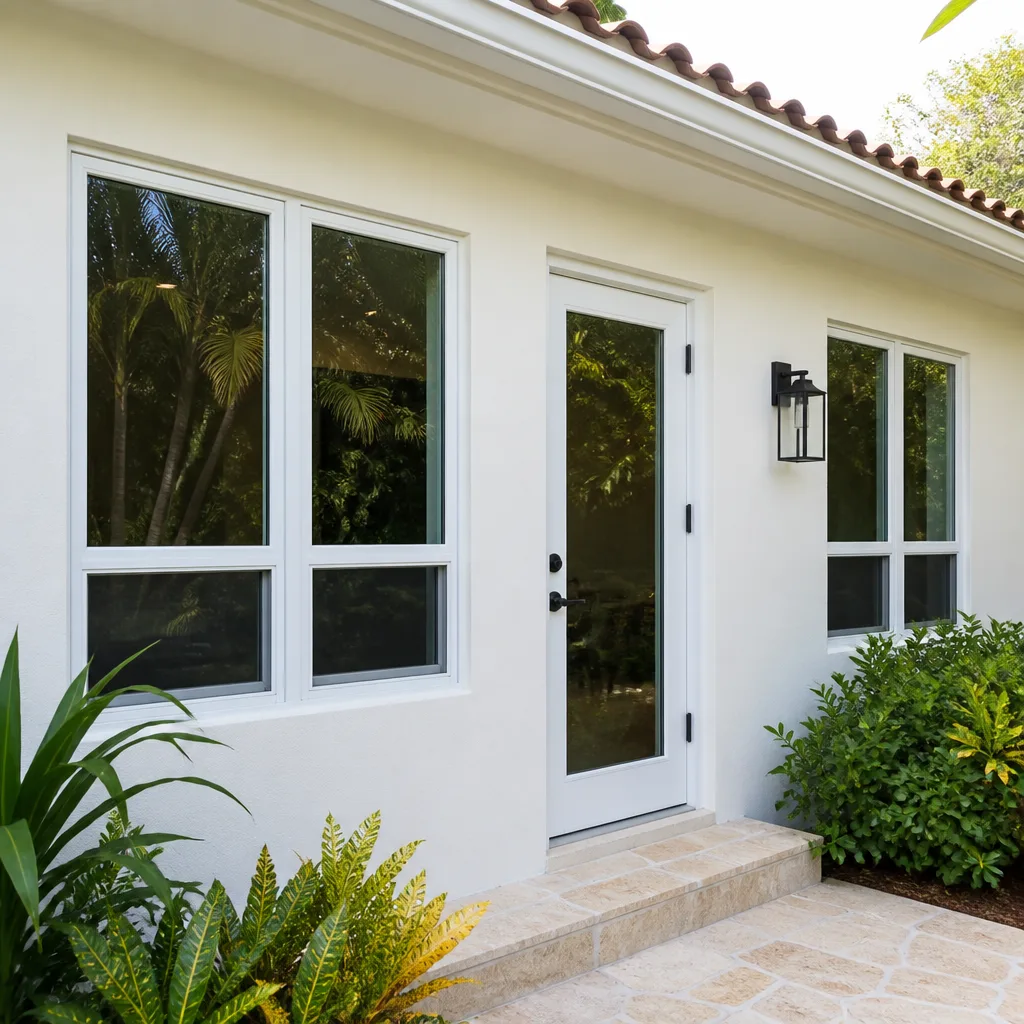 After
After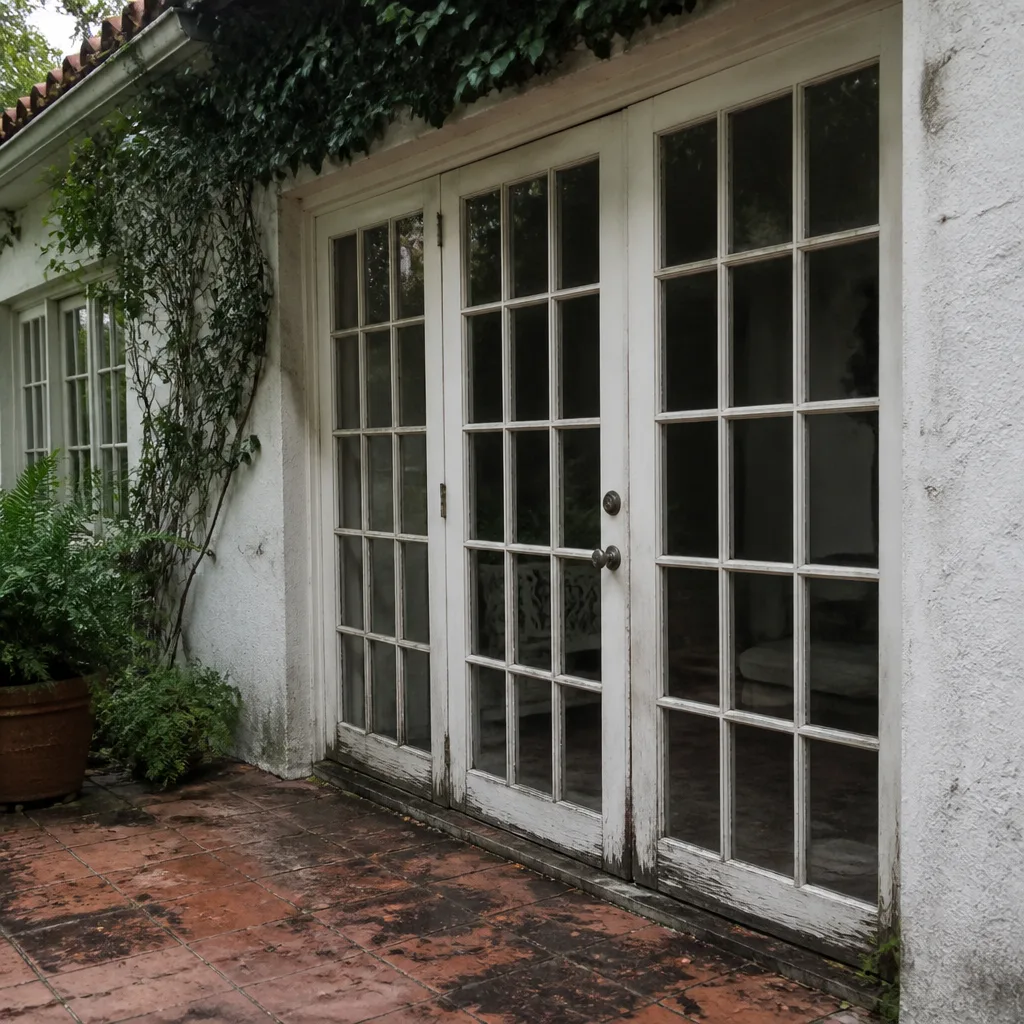 Before
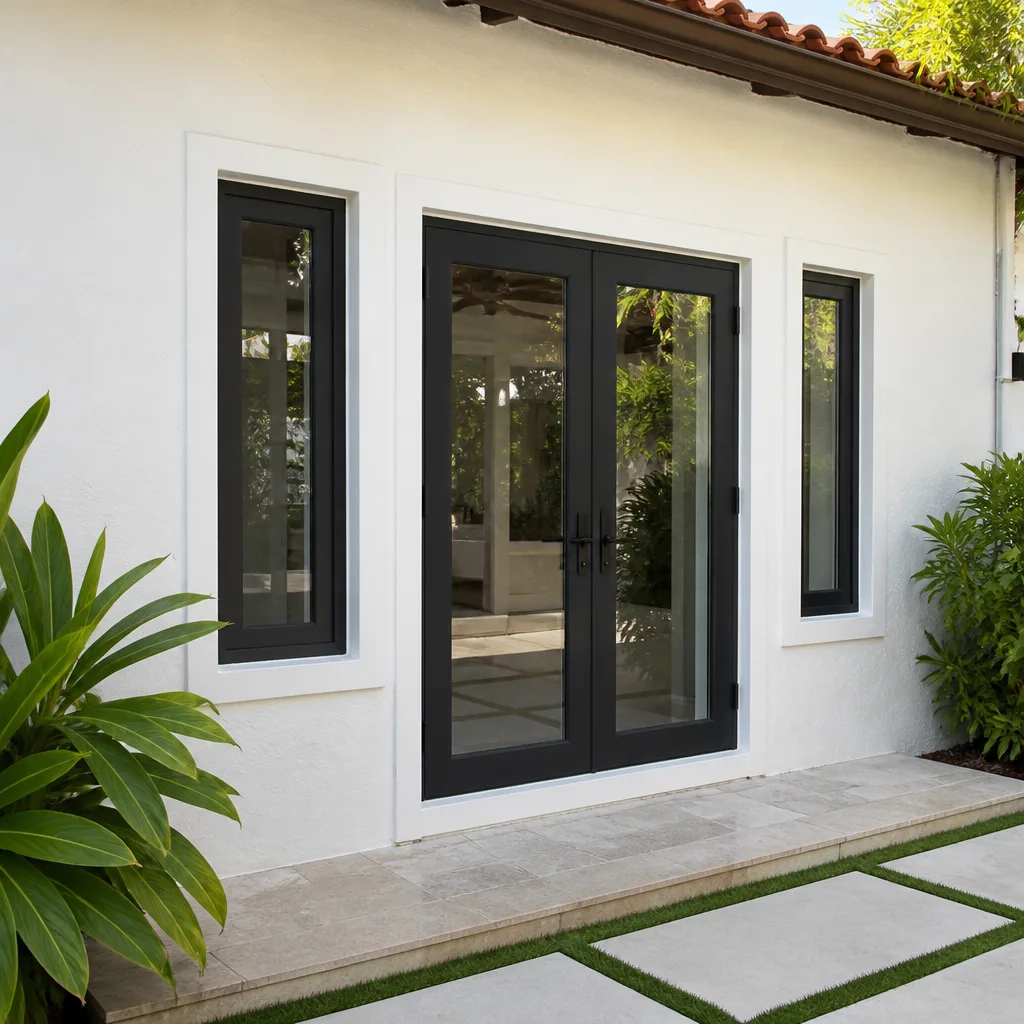 After
After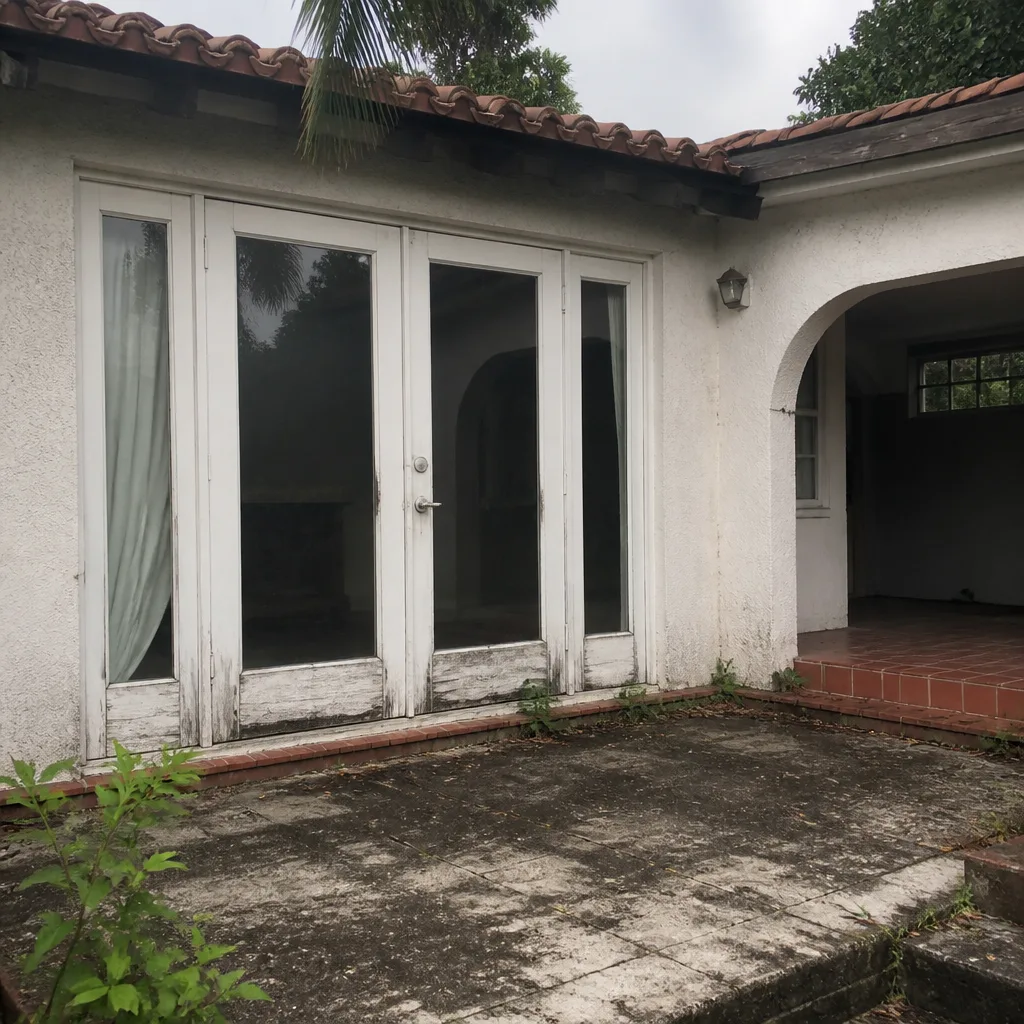 Before
 After
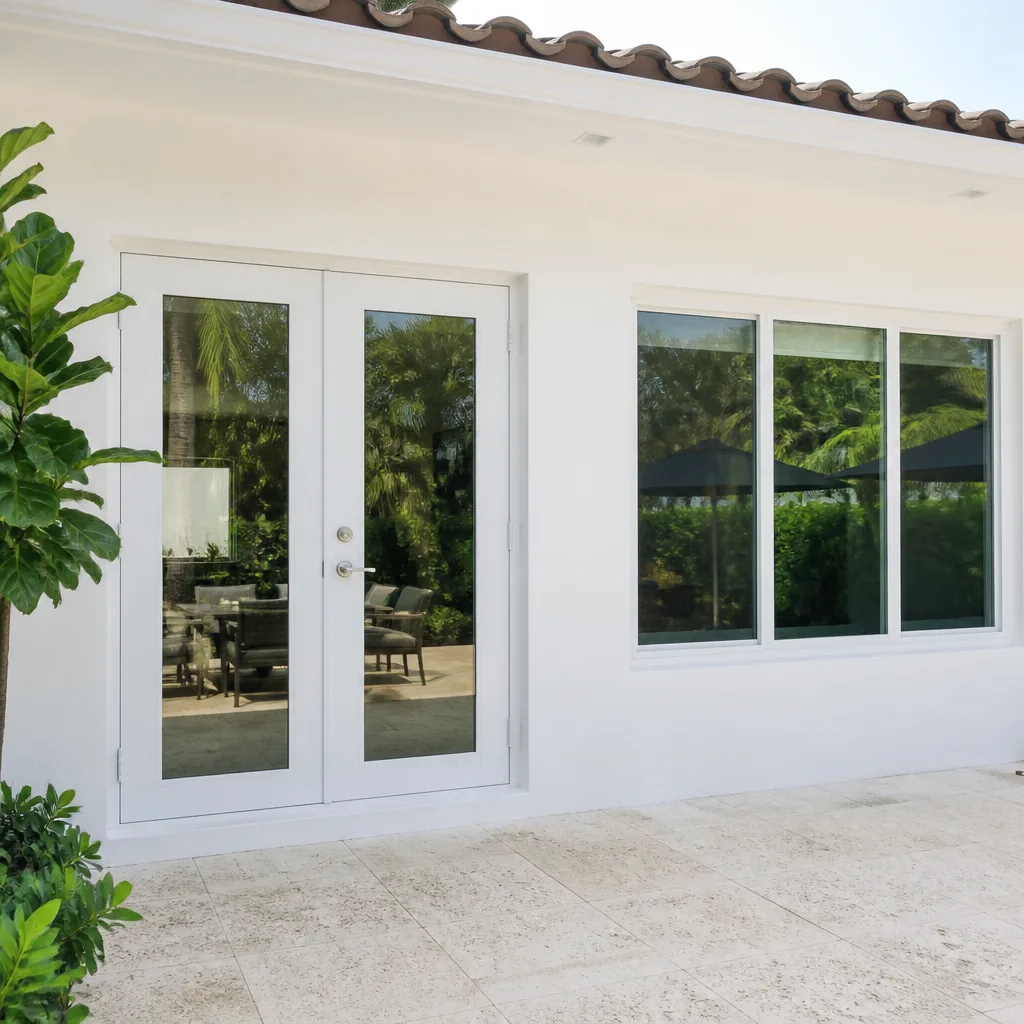
AfterImpact-rated, hurricane-proof, and storm-rated windows are not three different products. They are three ways of describing one thing: a window built and tested to stay intact when a hurricane hits Coral Gables.
The term that carries legal weight in Miami-Dade County is impact-rated. A window earns that label only when it passes the High-Velocity Hurricane Zone (HVHZ) testing protocol and receives a Miami-Dade Notice of Acceptance, an NOA, stamped on the product. “Hurricane proof” is marketing language nobody in the trade uses seriously, because nothing is proof against a Category 5, and “storm rated” is a looser phrase that can mean anything from a true impact unit to a standard window with tempered glass. If you are replacing windows in Coral Gables, you need impact-rated units with a valid NOA, and you need them installed to match what the Coral Gables Board of Architects will accept. Call (954) 507-3613 if you want to know exactly what your house needs.
Key takeaways:
– Impact-rated means the window passed Miami-Dade HVHZ testing and carries an NOA. This is non-negotiable in Coral Gables.
– Hurricane proof is a sales phrase. No legitimate glazier will use it because no window is truly proof against a direct Category 5 hit.
– Storm rated without a Miami-Dade NOA is not sufficient, regardless of what the sticker says.
– Coral Gables adds a second layer of review: the Board of Architects must approve the look of the window before it stays in the wall.
—
## What these labels actually mean, tested against Coral Gables code
Miami-Dade County sits inside the High-Velocity Hurricane Zone, the strictest glazing standard in the country. A window qualifies as impact-rated when the entire assembly, glass plus frame plus anchoring, survives a large-missile impact test: a 9-pound 2×4 fired at the glass at 50 feet per second, followed by thousands of positive and negative pressure cycles that simulate a hurricane’s wind loading. Pass that, and the manufacturer gets an NOA number. That number is what the building department checks when you pull a permit in Coral Gables.
“Hurricane proof” does not appear in any Florida Building Code section. We hear it from homeowners who have watched too many commercials, and we hear it from a few competitors who count on customers not knowing the difference. A hurricane-proof window, if such a thing existed, would survive every storm ever recorded. What actually exists is an impact-rated window that survives the design pressure for which it was engineered, usually a specific wind speed tied to your home’s exposure category.
“Storm rated” is the one to watch closely. Some manufacturers use it for windows that meet a lesser wind standard, like the one used in inland Florida. Those units do not carry a Miami-Dade NOA and will not pass inspection in Coral Gables. We have walked into too many homes where a homeowner bought storm-rated windows online, paid a crew to install them, and then discovered at the final inspection that nothing on the wall was legal. The windows came out, the money was gone, and the job started over. That is an expensive way to learn the difference between a sticker and an approval.
### What to look for on any window you are considering
– A Miami-Dade NOA number on the paperwork, not just on the brochure. If the seller cannot produce it, walk away.
– Design pressure ratings, not just a “hurricane” label. The window assembly needs a DP rating matched to your home’s wind zone and opening size.
– Large-missile impact certification, not just small-missile. Small-missile protects against debris above 30 feet off the ground. Coral Gables homes are low-rise, so you need large-missile.
– The Board of Architects review. In Coral Gables, code compliance gets you a permit. Architectural compatibility gets you a finished job that does not get flagged. Standard white vinyl impact windows, which pass code throughout most of Miami-Dade, routinely get rejected here because they clash with the Mediterranean Revival character this city protects.
—
## How much does this cost in Coral Gables, really?
Pricing for impact windows in Coral Gables runs higher than in most of South Florida, and there is a reason that has nothing to do with contractors padding invoices. The housing stock here is different. Most homes were built between 1920 and 1945, solid masonry construction with deep window reveals, arched openings, and original steel casements or wood sashes. Modern impact units are built for standard rough opening depths of 4-9/16 inches or thereabouts. Coral Gables walls can run twice that deep, which means custom frames, extended jambs, and trim work. That adds labor hours.
| Window type (typical Coral Gables single window) | Installed cost range | Notes |
|—|—|—|
| Standard impact single-hung, vinyl, standard depth | $900-$1,400 per opening | Rarely approved by Board of Architects for 1920s-1940s homes |
| Impact casement, aluminum, custom finish | $1,400-$2,200 per opening | Common choice for Mediterranean homes; requires architectural review |
| Impact fixed picture window, custom profile | $1,200-$2,400 per opening | Larger glass area; higher DP often required |
| Impact French door or sliding door | $4,000-$8,500 per opening | Largest openings; heaviest glass; most architectural scrutiny |
| Architectural review, permit, and NOA documentation | $300-$700 per project | Varies by project scope and Board of Architects meeting schedule |
The Board of Architects does not charge a fee large enough to explain the gap between Coral Gables pricing and, say, Kendall pricing. The gap is the house itself. A 1935 coral rock home on Alhambra Circle was never framed for a modern window. The original steel casements have narrow profiles, almost delicate muntins, and a patina that the Board expects you to honor or replicate. That means we are often quoting specialty aluminum lines like ES Windows or ECO Window Systems, fabricated to replicate the original sightlines. ES Windows, built in Italy and engineered for coastal conditions, has become one of the more common choices for Coral Gables homes because the profile widths and finish options let the window read as original to the house. Those units cost more than a standard white vinyl slider, and the approval odds are far better.
Dale Kessler, our owner, grew up in the Coral Gables area and spent summers near the Miracle Mile watching his father re-glaze storefronts and residential sidelights. He trained in building construction technology at Miami Dade College, where he learned to read load specs and Miami-Dade product approval numbers the way most people read a menu. That background matters when a Board of Architects reviewer asks why a window’s muntin profile differs from the 1930s original by three millimeters. The answer is usually that the NOA required it, and we can show the paperwork to back that up.
—
## Does “storm rated” ever make sense in Coral Gables?
Only if you are replacing glass on an interior room or a garage that is not counted as the building envelope, and even then the salt air off Biscayne Bay is brutal on cheap hardware. We have replaced enough corroded frames within sight of the water to know that marine-grade finishes on aluminum, or properly coated stainless hardware, are not an upgrade here. They are baseline. A storm-rated window without a Miami-Dade NOA is going to fail inspection on any exterior opening in Coral Gables, full stop. So the practical answer is no, storm-rated without impact certification does not make sense for an exterior window or door in this city.
Some homeowners ask whether they can save money by buying impact glass in a non-impact frame, or by shopping a brand they saw online. We will not install either, and a licensed contractor who will is not doing you a favor. The NOA covers the entire assembly, not just the glass. Mix and match the components, and the approval is void. If it is not in writing, it is not a guarantee, it is just a conversation.
—
## FAQs
What is the difference between impact, hurricane proof, and storm rated windows?
Impact windows carry a Miami-Dade NOA certifying the entire assembly passed large-missile and pressure testing; “hurricane proof” is a marketing phrase with no code definition; and “storm rated” often refers to a lesser wind standard that does not meet Coral Gables code. Only impact-rated units with a valid NOA are acceptable on the exterior of a Coral Gables home.
How much do impact windows cost in Coral Gables?
Expect $900 to $2,400 per window opening installed depending on size, profile, and finish, with specialty aluminum lines required for many historic Mediterranean homes running at the higher end, and doors starting around $4,000. Coral Gables pricing is higher than surrounding areas because the thick masonry walls and architectural review requirements add framing and fabrication work that standard installations do not involve. Call (954) 507-3613 for an exact quote, estimates are free.
Does Coral Gables require impact windows or are storm rated windows enough?
Coral Gables requires impact-rated windows with a Miami-Dade Notice of Acceptance on every exterior replacement, and storm-rated windows without an NOA will not pass inspection. The city also requires Board of Architects approval for the window’s appearance, which is a separate review on top of the building code.
Can I install impact windows in a 1920s Coral Gables home without changing the look?
Yes, but it usually requires specialty aluminum impact windows with narrow profiles and custom finishes that replicate the original steel casements or wood sashes, and we recommend getting the Board of Architects review started before ordering anything. Standard white vinyl impact windows are legal under Miami-Dade code but are routinely rejected by the Board on Mediterranean Revival homes.
—
If you would rather have it looked at, TruePane Windows & Doors offers a no-pressure assessment in Coral Gables, call (954) 507-3613. We will measure the openings, check the wall depths, and tell you which windows will pass both Miami-Dade code and the Board of Architects, on paper, before you spend a dollar.
Written by Dale Kessler, Owner, TruePane Windows & Doors at TruePane Windows & Doors, serving Coral Gables, FL.
Six Reasons Homeowners Choose TruePane Windows & Doors
Impact systems engineered to design pressures up to +/-100, matched to your wind zone - your openings hold when the storm arrives.
Low-E insulated impact glass from our manufacturer lines commonly cuts monthly cooling bills 20-30%.
Laminated impact glass shuts out up to 40% of outside noise - traffic, neighbors, weather.
Monitoring services run $30-90 a month. Laminated impact glass resists forced entry around the clock, with no subscription.
Florida homeowners average around 25% savings on the windstorm portion of their policy after protecting every opening - some homes qualify for more.
A full impact package upgrades curb appeal, buyer confidence and appraised value in one project.